 Morgan Barnhart
Business, Environment, Tech
Morgan Barnhart
As the driving force behind MorganBarnhart, our author is a passionate advocate for blending business acumen with technological innovation. With a background that spans both the entrepreneurial and tech worlds, they are dedicated to helping businesses navigate the complexities of the digital age. Read More
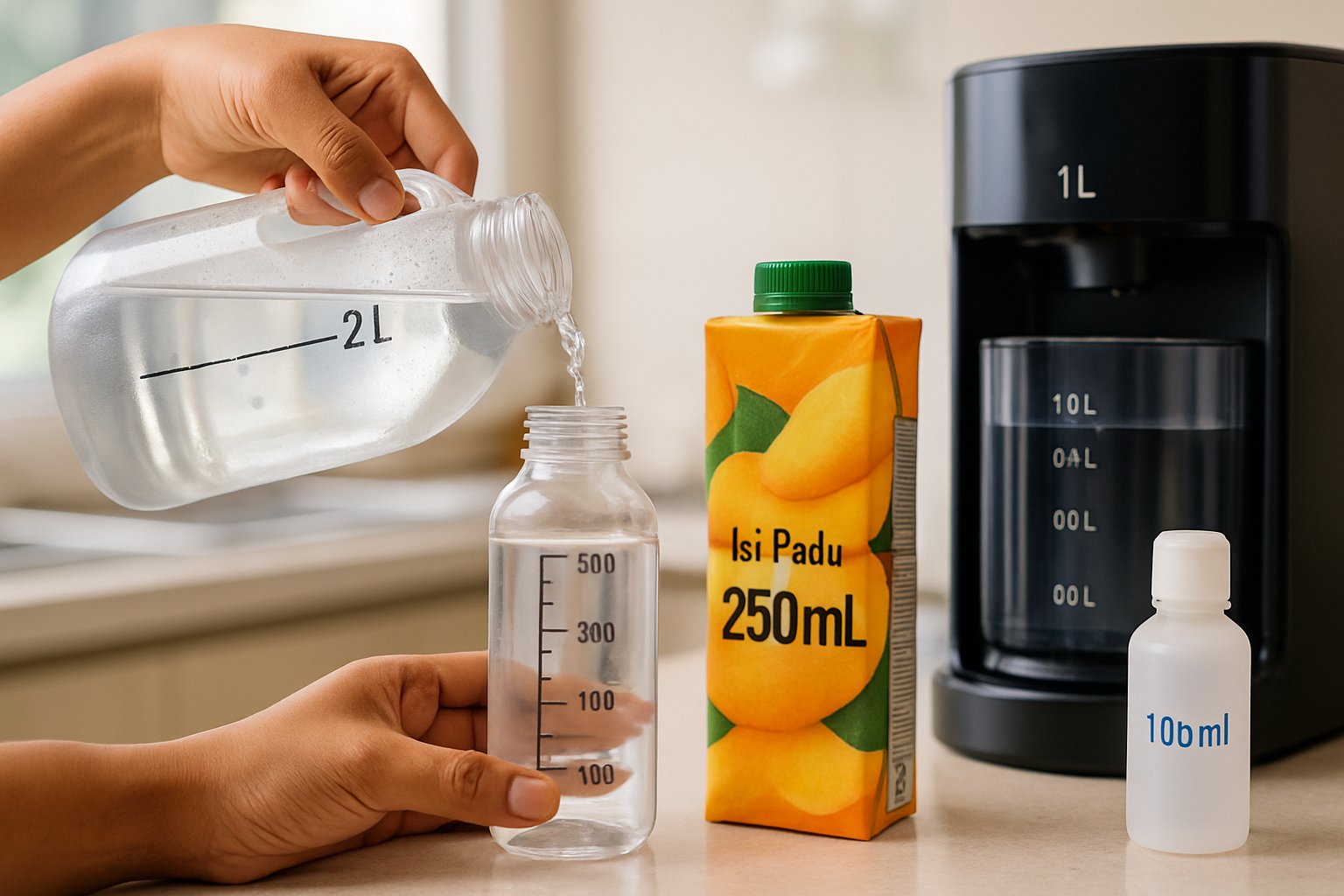
You convert milliliters (mL) to liters (L) constantly without noticing—when you top up a water bottle, read a beverage label, dose a cleaning solution, or set up a coffee machine. In Malaysia, packaging often lists volumes in milliliters while larger containers show liters. With on-the-go routines in 2025, you increasingly rely on quick, accurate conversions on your phone so you can make fast decisions safely.
Trends you see today include: more beverage SKUs in 330 mL, 440 mL, and 500 mL; health apps logging water intake by mL; and appliances displaying L. You don’t want errors—especially if the conversion affects recipe results, equipment limits, or any situation where precision matters. Your safest approach is to use a simple formula, a reliable conversion table, and quick mental checks.
This latest update focuses on clarity and safety. You get the exact formula, a skimmable chart, stepwise methods, common mistakes to avoid, and practice problems. If you prefer not to do the math, you can explore alternatives like a built-in calculator, voice assistants, or our simple unit tool in the unit converter guide.
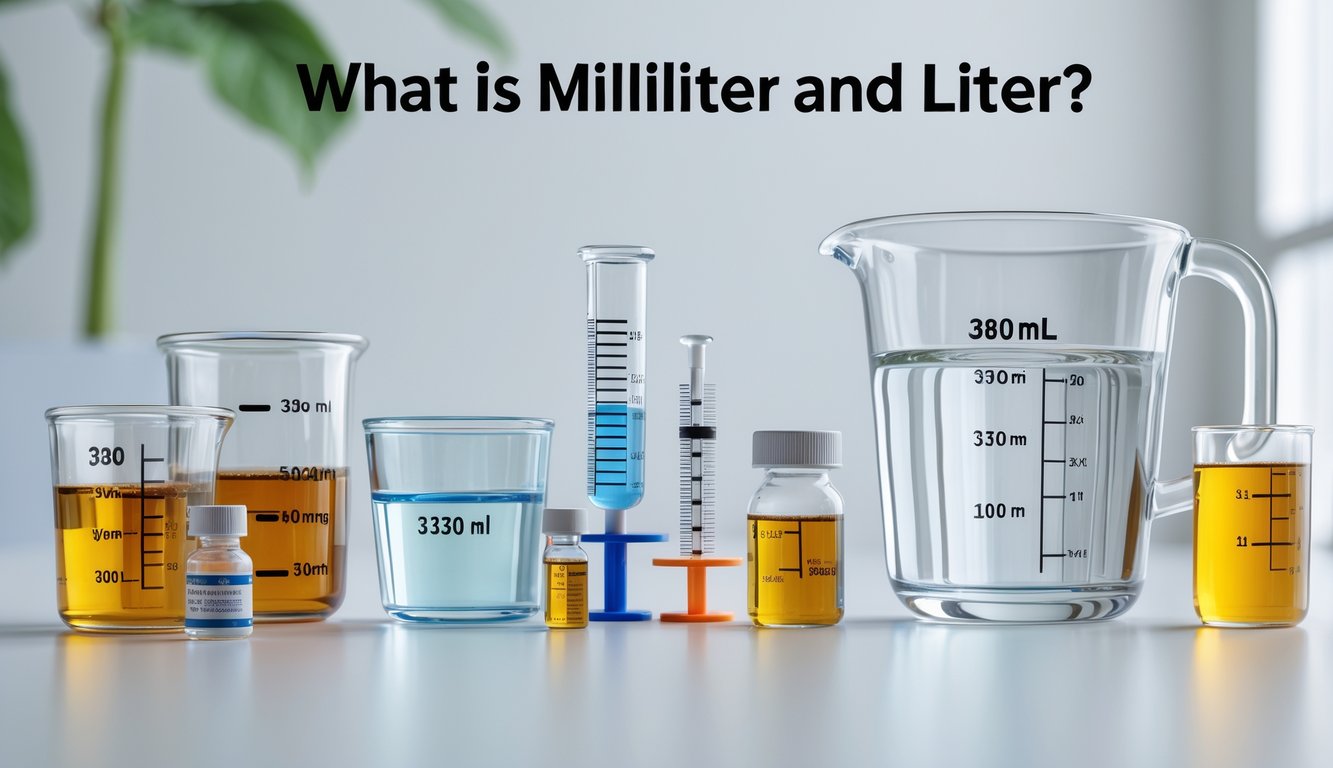
A milliliter (mL) is a metric unit for measuring liquid volume. It is one-thousandth of a liter. Everyday items in Malaysia often use mL: small drink cans (e.g., 330 mL), medicine doses, coffee shots, or condiment packs. Because the unit is small, you get fine control when measuring ingredients or dosing liquids.
A liter (L) is a standard metric base unit for volume. Many household appliances, water filters, aquariums, and large beverage bottles use liters (e.g., 1 L, 1.5 L). One liter equals 1,000 milliliters. When you switch between product labels in mL and appliance settings in L, you use the mL to L conversion.
The core relationship is simple and exact:
1 L = 1,000 mL
So to convert milliliters to liters, divide by 1,000:
Liters = Milliliters ÷ 1,000
Use the same formula in different forms to fit your need:
Follow these steps when precision matters:
Use these quick mental patterns:
On-the-go tip: say the number in your head with three hidden decimals and slide left: 850.0 → 0.850 L.
When you already have mL and need L, proceed like this:
Any time you convert to liters, label the final unit clearly as “L” to avoid future mix-ups. If you track hydration in an app that logs in liters, convert your bottle’s mL reading first. For example, a 600 mL bottle is 0.6 L. If a machine’s maximum is 1.2 L, ensure your additions remain below that volume.
If you’re multitasking (e.g., following a recipe video), pause to double-check units. Accuracy keeps you safe and prevents waste.
Examples of direct calculation:
Safety check: re-run the operation in reverse to confirm. For example, 0.85 L × 1,000 = 850 mL. If the reverse doesn’t match, re-check your decimal placement.
| Milliliters (mL) | Liters (L) |
|---|---|
| 1 | 0.001 |
| 5 | 0.005 |
| 10 | 0.01 |
| 50 | 0.05 |
| 100 | 0.1 |
| 150 | 0.15 |
| 200 | 0.2 |
| 250 | 0.25 |
| 330 | 0.33 |
| 350 | 0.35 |
| 375 | 0.375 |
| 400 | 0.4 |
| 440 | 0.44 |
| 500 | 0.5 |
| 600 | 0.6 |
| 650 | 0.65 |
| 700 | 0.7 |
| 750 | 0.75 |
| 800 | 0.8 |
| 850 | 0.85 |
| 900 | 0.9 |
| 950 | 0.95 |
| 1,000 | 1 |
| 1,500 | 1.5 |
| 2,000 | 2 |
| 3,000 | 3 |
| 5,000 | 5 |
| mL | L | Notes |
|---|---|---|
| 150 | 0.15 | Small drink/medicine measure |
| 250 | 0.25 | Quarter liter |
| 330 | 0.33 | Common can size |
| 440 | 0.44 | Large can |
| 500 | 0.5 | Half a liter |
| 600 | 0.6 | Typical bottle |
| 750 | 0.75 | Three-quarters liter |
| 1,000 | 1 | One liter |
| 1,500 | 1.5 | Common large bottle |
| 2,000 | 2 | Family-size container |
Use the tables above when you’re away from a calculator. For other unit paths (like cups or fluid ounces to mL/L), see alternatives in the unit converter guide.
These are the errors you most often encounter and simple ways to prevent them.
Misplacing the decimal. Example: writing 850 mL as 8.5 L. Avoid it by always counting three places left: 850 mL → 0.850 L.
Confusing units (mL vs. L vs. oz). Mixing systems causes wrong results. Check the label, convert once to L, then stick to L for the entire task.
Rounding too early. If you round 0.444 L to 0.4 L before adding, your total drifts. Keep at least two decimals until the final step.
Forgetting device limits. Appliances may state maximum capacity in liters. Converting 1,600 mL to 1.6 L and then overfilling a 1.5 L tank can damage equipment. Confirm capacity first.
Multitasking errors. If you’re chatting or streaming, you might rush. Pause, convert, then continue. Use a quick check: reverse the conversion to confirm.
Try these and check with the formula (divide by 1,000). Answers follow after the list.
Answers: 0.1 L; 0.15 L; 0.33 L; 0.9 L; 1.25 L; 2.75 L; 3.6 L.
On-the-go help: save a few anchors—250 mL (0.25 L), 500 mL (0.5 L), 750 mL (0.75 L), 1,000 mL (1 L). They’re easy checkpoints when you don’t have time to open a calculator.
1 milliliter equals 0.001 liters. You move the decimal three places left: 1 mL → 0.001 L.
850 mL equals 0.85 liters. Use the formula L = mL ÷ 1,000 → 850 ÷ 1,000 = 0.85 L.
150 mL is 0.15 L. It’s a small amount—about a small drink serving or a modest dose for recipes and solutions. Whether it’s “a lot” depends on context (e.g., cooking vs. dosing).
Divide by 1,000. 1,000 mL ÷ 1,000 = 1 L. Remember: 1,000 mL equals exactly 1 liter.
Explore more tools and guides for other units if you prefer automated calculators. Your focus here is accurate, safe conversions.