 Morgan Barnhart
Business, Environment, Tech
Morgan Barnhart
As the driving force behind MorganBarnhart, our author is a passionate advocate for blending business acumen with technological innovation. With a background that spans both the entrepreneurial and tech worlds, they are dedicated to helping businesses navigate the complexities of the digital age. Read More
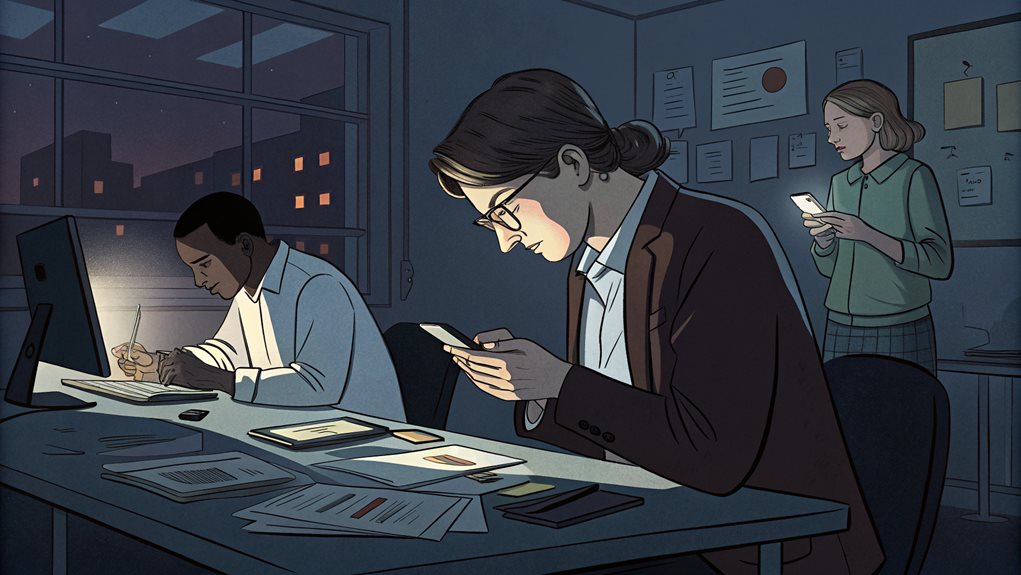
Mobile devices are undermining your productivity with constant notifications that fragment your focus and create notification fatigue. App overload complicates tasks and leads to inefficiencies, while security risks pose threats to sensitive data. Additionally, the myth of multitasking can overwhelm your cognitive resources and result in more mistakes. For those looking to improve their workflow, there are effective strategies to mitigate these distractions and enhance focus. Stay tuned to uncover actionable solutions.
How often do you find yourself interrupted by the incessant buzz of notifications on your mobile device? This constant barrage can lead to notification fatigue, where you become desensitized to alerts. As a result, your ability to concentrate diminishes, creating focus fragmentation. Each time you're interrupted, it takes time to regain your previous level of focus, hindering productivity. The cumulative effect of these disruptions can be detrimental, making it challenging to engage deeply with tasks. Over time, this pattern may lead to increased anxiety and decreased satisfaction with your work. Understanding how notifications fragment your attention is vital for reclaiming your focus and enhancing your productivity. Consequently, it is important to manage notifications effectively to mitigate these distractions.
The constant interruptions from notifications can lead to a growing dependence on mobile apps, many of which promise to boost productivity. However, this reliance can create app fatigue, where the sheer volume of tools becomes overwhelming. Instead of enhancing efficiency, you may find yourself lost in a sea of features, often experiencing feature bloat that complicates rather than simplifies tasks. Each app claims to streamline your workflow, yet the result is often a fragmented day filled with distractions. As you juggle numerous applications, the original intent of enhancing productivity may be lost, leaving you questioning whether these tools are helping or hindering your efforts. It is crucial to evaluate whether these apps truly serve your needs or simply add to the chaos.
While mobile devices offer unparalleled convenience, they also expose users to significant security risks that often go unnoticed. Data breaches can happen through unsecured networks, putting sensitive information at risk. Privacy concerns arise when personal data is collected without your knowledge, often leading to misuse. Malware threats are increasingly common, as harmful software can infiltrate your device through seemingly harmless apps or links. Phishing attempts also target mobile users, tricking them into revealing confidential information. Additionally, device theft is a real danger; losing your phone can result in exposing sensitive data to unauthorized parties. Understanding these hidden threats is essential for maintaining security while leveraging mobile technology in your professional life.
Although many believe multitasking boosts productivity, research suggests it often does the opposite. When you attempt to juggle multiple tasks, you're likely experiencing cognitive overload. This overload can lead to decreased efficiency and errors, as your brain struggles to keep up with competing demands. Task switching, the process of moving between different activities, consumes significant mental resources, disrupting your focus and hindering your ability to complete tasks effectively. Instead of accomplishing more, you're left feeling scattered and overwhelmed. Ultimately, the illusion of multitasking can create a cycle of inefficiency, reducing your overall output and compromising the quality of your work. Recognizing the pitfalls of multitasking is essential for fostering a more productive work environment.
Distractions from mobile devices can greatly contribute to the inefficiencies associated with multitasking. To combat this, implementing focus techniques is essential. Start by setting specific times for checking notifications, which can help minimize interruptions. Additionally, consider scheduling regular digital detox periods, where you temporarily disengage from all devices. This practice not only enhances concentration but also allows you to recharge mentally. Encourage a culture of focus within your team by promoting the use of "do not disturb" modes during critical work hours. Finally, utilizing productivity apps that limit access to distracting sites can further streamline your workflow. By applying these strategies, you can markedly reduce mobile distractions and boost overall productivity in the workplace.
Mobile devices can lead to mobile anxiety and distraction overload in the workplace. You might find it hard to focus, feeling overwhelmed by constant notifications, which ultimately affects your mental health and productivity negatively.
Social media engagement can greatly disrupt your workplace focus. Frequent notifications and the urge to check updates can divert attention from tasks, leading to decreased productivity and increased distractions that hinder overall workplace efficiency.
Mobile distractions greatly impact teen workers and senior employees differently. Teens often struggle with multitasking due to social media, while seniors may find technology overwhelming, leading to decreased productivity across various workplace demographics.
To measure productivity loss from mobile device use, you can analyze productivity metrics alongside device tracking data. By correlating usage patterns with performance outcomes, you'll identify trends and quantify the impact on overall productivity effectively.
Excessive mobile device usage can lead to cognitive overload and attention fragmentation, hindering your ability to focus and process information. Over time, this can negatively impact your productivity, creativity, and overall job satisfaction in the workplace.